
Bone Grafting
in Northeast Brampton
Bone grafting rebuilds jawbone that has been lost after tooth loss, so you can have a strong, stable foundation for dental implants. At Gardenbrooke Dental in Northeast Brampton, we offer socket preservation and ridge augmentation using safe, proven graft materials.
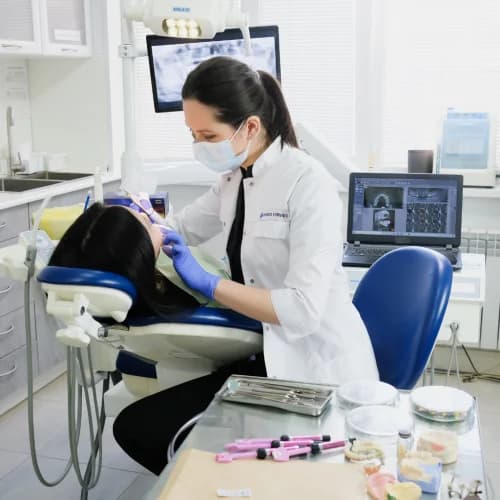

What Is Bone Grafting?
Bone grafting places bone material where the jaw has shrunk or been damaged. The graft may come from your own bone, processed donor bone or synthetic sources. Over time, it remodels into your natural bone.
Types of Bone Grafts
- Socket preservation: placed at the time of extraction to protect the bone and simplify future implant treatment.
- Ridge augmentation: rebuilds a jaw ridge that has lost height or width.
Benefits
- Restores bone volume lost after extraction or tooth loss.
- Creates a foundation for stable, long-lasting implants.
- Helps prevent further bone loss in the area.
- Multiple safe graft materials available.
The Process
- Assessment and imaging: X-rays or cone-beam CT scans measure existing bone.
- Treatment planning: we choose the graft type and technique.
- Graft placement: under local anaesthesia, covered with a membrane and closed.
- Healing: the graft remodels into native bone.
- Implant placement: once integration is confirmed.
Healing Time
Soft tissue heals within two to three weeks. The bone itself takes three to six months to integrate and remodel before it can support an implant.
Before Your Visit
- Share your medical history and medications.
- Tell us if you smoke, as it can slow healing.
- Bring recent X-rays if you have them.
- Arrange a ride if you will be sedated.
- Bring your insurance details.
After Your Treatment
- Soreness and swelling for several days is normal. Take pain medication as directed.
- Eat soft, cool foods and avoid chewing on the site.
- Do not smoke or use straws.
- Keep the area clean as instructed.
- Call us for fever, heavy bleeding or worsening swelling.
Cost and Insurance
Socket preservation starts from $600 and ridge augmentation from $1,500. We will confirm your cost and review your coverage before treatment.
Why Choose Gardenbrooke Dental
- Planned with your implant in mind by Dr. Tanya Khattra, DDS.
- Open seven days a week.
Frequently Asked Questions
Is bone grafting painful?
The procedure uses local anaesthesia, so discomfort during treatment should be minimal. Soreness and swelling afterward are managed with prescribed pain medication and typically settle in a few days.
How long does bone graft healing take before an implant?
Soft tissue heals in two to three weeks. Bone takes three to six months to integrate. We schedule follow-up imaging to confirm readiness.
Can Dr. Khattra perform bone grafting, or do I need a specialist?
General dentists routinely perform minor socket preservation grafts at extraction. Larger or more complex cases may be referred to an oral surgeon or periodontist, and your dentist will advise.
What are graft materials made from?
Your own bone, processed donor bone or synthetic materials.
How much does bone grafting cost?
Socket preservation starts from $600 and ridge augmentation from $1,500.
Book Your Visit in Northeast Brampton
Book your bone grafting consultation in Northeast Brampton.
- Phone: (905) 913-7878
- Address: 275 Gardenbrooke Trail, Brampton, ON L6P 4M6
- New patients are always welcome, and same-day appointments are available. We are open seven days a week.